Vignelli and Knoll
A partnership defined by total design
Revisit the partnership that shaped the course of modern design—and continues to influence the visual identity at Knoll.
Photo by Delfino Sisto Legnani, DSL Studio
Apr 20, 2026
3 minutes
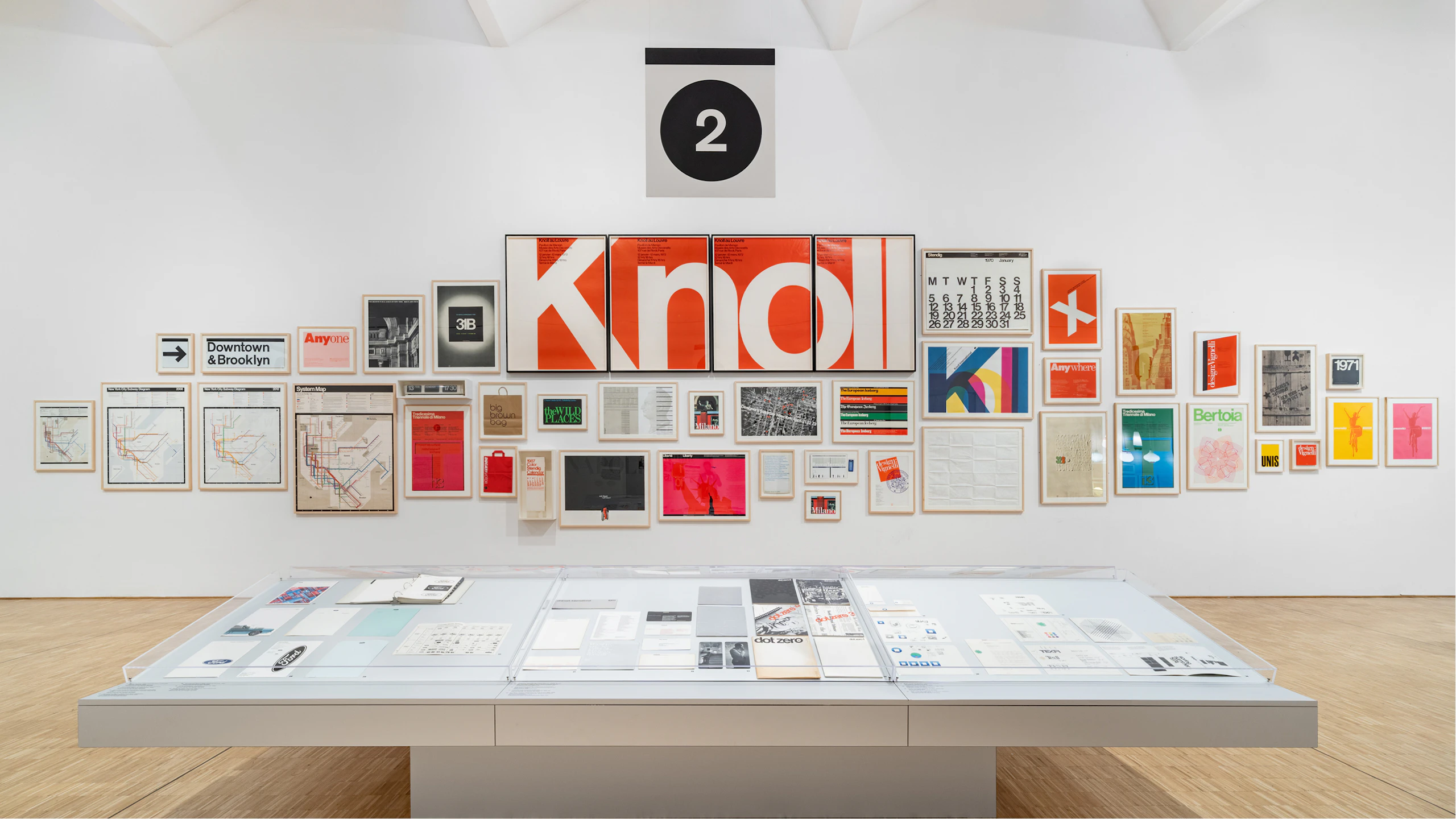
In an unpublished oral history from the late 1970s preserved in Knoll’s corporate archive, Massimo Vignelli described Knoll as “the most exciting, rewarding client of my professional career.”
That sentiment is articulated by Amy Auscherman, Director of Archives and Brand Heritage at MillerKnoll, in her essay, “The Image of Design Awareness: Massimo and Lella Vignelli’s Graphic Program for Knoll International,” written to accompany a retrospective of the Vignellis’ work at Triennale Milano, a leading international forum for art, design, culture, and technology.
A decade before Knoll became the Vignellis’ most exciting client, Massimo was a partner at Unimark International in Chicago. Meanwhile, Knoll was actively expanding its global presence. Amid this period of growth, the company sought to reaffirm the rigorous philosophy of “total design” established by Florence Knoll, who had recently stepped away from the brand she built.
Knoll recruited the Vignellis to evolve and clarify the brand’s identity at a critical moment. They grounded their approach in a system capable of bringing order to complexity: the grid. This structural framework influenced Knoll’s visual identity while also guiding its approach to place design. In parallel, the company’s typographic identity evolved from the iconic slab serif introduced decades earlier by Herbert Matter to Helvetica, which became both a Vignelli signature and a benchmark of modern corporate graphic design.
(The Vignellis) grounded their approach in a system capable of bringing order to complexity: the grid.
The resulting identity extended across every touchpoint: catalogs and price lists, showrooms and exhibitions, signage, stationery, packaging, even semi-trucks. “The most exciting for me were the brochures, posters, and major four-color ads,” Massimo Vignelli recalled. Though they were conceived as sales tools and ephemeral in nature, these ads were so inventive that many ultimately entered major museum collections.
A return to the nexus of design culture
Fittingly, the major retrospective Lella and Massimo Vignelli. A Language of Clarity opened in March 2026 at Triennale Milano, which will host numerous events and activations during Salone del Mobile—an event for which the Vignellis helped to shape the graphic identity.
The exhibition traces their far-reaching impact on twentieth-century design, spanning graphic systems, product design, interiors, and exhibitions. Through a curated selection of furniture, drawings, models, photographs, magazines, and more, it maps the Vignellis’ journey personal and design journey from postwar Milan to New York, where they settled in 1965.
Selections from the archives
In partnership with Triennale Milano, MillerKnoll is lending significant historical works from the MillerKnoll Archives to the exhibition. Drawn from Knoll’s archival collection—including materials newly acquired for this occasion—the selection underscores the Vignellis’ central role in shaping Knoll’s graphic and corporate identity.
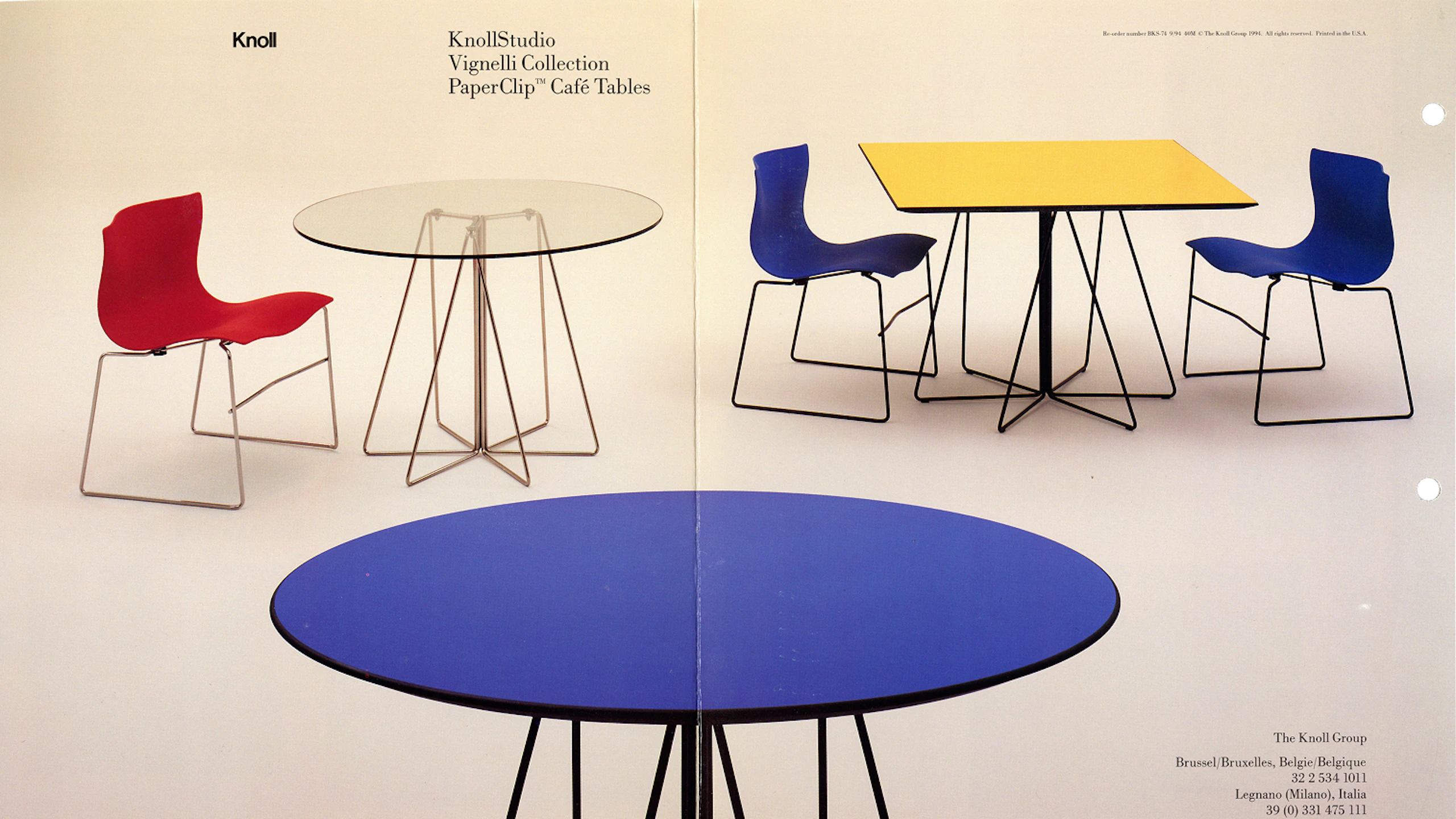
Featured works include the PaperClip Table and Handkerchief Chair, a playful take on the traditional stacking office chair, which Knoll released in the 1990s. Also featured are monumental posters from the Vignellis’ first independent project for Knoll, Knoll au Louvre (1972). This landmark exhibition opened at the Musée des Arts Décoratifs and placed the work of the American furniture manufacturer within one of the world’s most prestigious cultural institutions.
“The Vignellis brought extraordinary clarity to Knoll at a pivotal moment in its international expansion,” Auscherman shared. “They evolved the company’s identity into a coherent system that could operate globally, extending from typography and exhibitions to product and environment.”
Visit Lella and Massimo Vignelli. A Language of Clarity from March 25 through September 6, 2026 at Triennale Milano, an international cultural institution and meeting place between the languages of design, architecture, and the visual and performing arts. For more information on MillerKnoll’s partnership with Triennale Milano in support of the exhibition, visit the Triennale website.