Planet
Climate change is not just a distant threat. It is an urgent challenge confronting us today. So, we’re taking bold steps toward a more sustainable future for the planet we share.
Our mission is to design and make the world’s best products in the most sustainable way.
Our environmental goals
Sustainability is a shared responsibility: Together with our partners, suppliers, and clients, we are working to drive meaningful change and make a lasting difference in the way we design, manufacture, deliver, and maintain furnishings and the built environment.

Carbon
We strive to design the lowest carbon footprint products and commit to achieving net-zero carbon emissions.
Renewable energy
We have transitioned to 100 percent renewable electricity ahead of our FY2026 deadline. We achieved this goal using a combination of Renewable Energy Certificates (RECs), Power Purchase Agreements (PPAs), and on-site solutions.
Low-carbon products
In 2022, we established carbon baselines for our 100 top-selling products across our brands (including Scope 1, 2, and 3 emissions). Today, we’re working to reduce the carbon footprint of these products by at least 25 percent by FY2030.
Sustainable logistics
We are committed to establishing carbon baselines and setting reduction goals for our logistics by FY2026. This includes upstream and downstream transportation and distribution.
Transparency
By FY2028, we aim to publish the carbon footprints of our top 100 products (based on annual global sales) annually, and of any new products that exceed $10 million USD in annual sales.
Engaging our suppliers
By FY2027 we plan to establish carbon baselines and set reduction goals for our top 25 suppliers—defined as our top five suppliers of each of our top five commodities (wood, plastics, metal, textiles, and foam) based on annual sales.
Environmental product data when you need it
Wondering how products from MillerKnoll brands can help achieve different sustainable building certifications? Our brands house product sustainability data on Ecomedes.


Materials
We are working to use sustainable, 100 percent bio-based or recycled materials.
Eliminating PFAS
We have eliminated added PFAS in North America and are working toward achieving this goal worldwide by FY2027. This excludes electrical components, protective stone coatings, some pneumatic cylinders, and existing inventory.
Responsible sources
We’re working to verify that at least 90 percent of wood products from our brands come from sustainably harvested timber by FY2030. We’re also working to ensure that 90% of all natural materials (wool and mohair) are ethically sourced.
Recycled content
We’re working to exceed 75 percent recycled content across our top 100 textile SKUs by FY2030. Our top 100 may come from any of our brands and will be determined by annual yardage and recycled content by material family.
Phasing out ‘forever chemicals’
In December 2024, MillerKnoll committed to eliminating added PFAS from our products. Known as “forever chemicals,” these substances do not break down easily, posing long-term health risks.


Circularity
We aim to design timeless products with zero waste.
Zero landfill
We aim to achieve zero landfill for our top five manufacturing sites (based on global volume) by FY2030. Our top sites are quite stable year to year. And we’ll use best practices from these sites to reduce waste across all our facilities.
Eliminating single-use plastic
We are dedicated to eliminating single-use plastic packaging for all MillerKnoll manufacturing sites by FY2030. This includes polystyrene, bubble wrap, shrink wrap, plastic wrap, and banding.
Material efficiency
Our top five commodities are wood, plastic, metal, textiles, and foam. We are working to develop specific action plans for each of these to increase material utilization and efficiency by FY2026.
Closing the loop
We are working to increase furniture waste diverted from landfills to 10 million pounds (about 4.5 million kg) by FY2027, calculated by weight of any products diverted from landfill through take-back programs such as rePurpose.
Expanding the life cycle of enduring designs
Our rePurpose take-back program recently expanded in North America to include products from across our collective of brands, with global expansion on the horizon.

‘We will be good stewards of the environment’
Since 1953, when Herman Miller founder D.J. De Pree established environmental stewardship as a company priority, our brands have been pioneers in sustainability. These timelines provide a snapshot of what we’ve accomplishments since.
2022
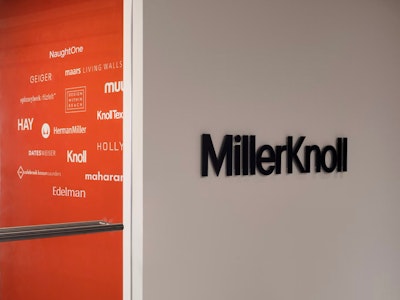
Awarded WELL Platinum Certification
MillerKnoll’s retail headquarters in Stamford received a Platinum-level WELL Certification and a WELL Health Safety Rating.
2022
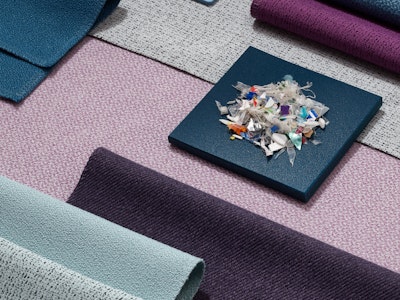
Unified Ecomedes platforms
MillerKnoll combined Herman Miller and Knoll’s Ecomedes platforms to ease access in finding sustainable products across our entire collective of brands.
2022
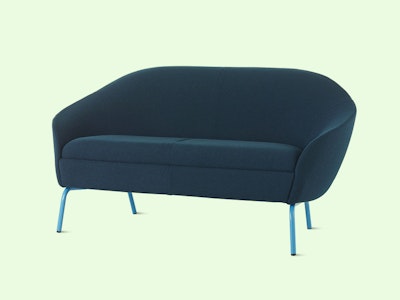
Expanded product circularity
NaughtOne’s Ever Sofa and Penny, Sweep, and Tier collections were designed to be easily disassembled and recycled at end of life.
2022
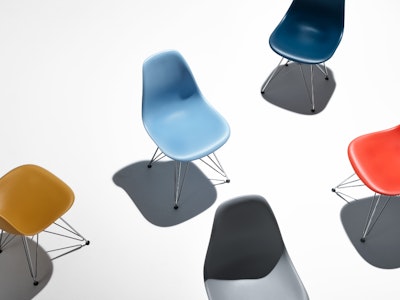
Added post-industrial plastics to classic designs
The classic Eames Molded Plastic Chair from Herman Miller incorporated 100-percent post-industrial recycled plastic in its design.
2023
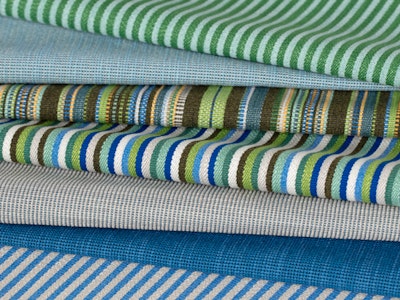
Eliminated PFAS chemicals from textiles
Maharam eliminated all added PFAS from its products and all phthalates, flame retardants, and antimicrobials from its textile finishes.
2023
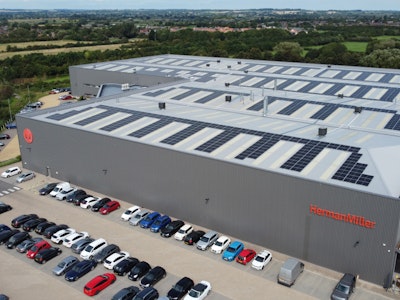
Generated first solar-powered energy
MillerKnoll’s PortalMill manufacturing facility in the UK generated its first solar-powered energy. It will offset 140 tons of CO2 per year.
2024
Independent verification of GHG emissions data
MillerKnoll obtained external assurance of our FY22 and FY24 Scope 1 and 2 greenhouse gas emissions, reflecting our commitment to credible, transparent reporting.
2025
Achieved SBTi validation
The Science Based Targets initiative (SBTi) approved our carbon emission reduction targets, which include a 50% cut from FY22 levels of Scope 1 and 2 GHG emissions by FY30.
Our purpose-led work goes beyond sustainability
Our Better World pillars include planet, community, and people. Explore other ways we’re using the power of design to shape a better world.

Community
We believe in being a force for good in our communities worldwide. So, we’re working to engage our associates, nurture a spirit of giving, and deliver measurable impact.

People
We are building a culture that champions associate engagement, nurtures and rewards talent, and provides opportunities for career growth.

Better World
Our annual impact report is a record of the good work we’ve done over the past fiscal year through our environmental, social, and governance (ESG) practices.